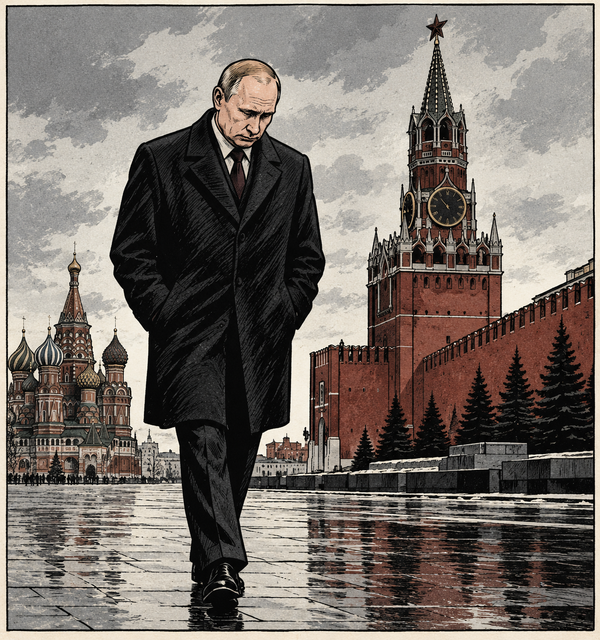
The Ukraine Conflict to date: All You Need to Know
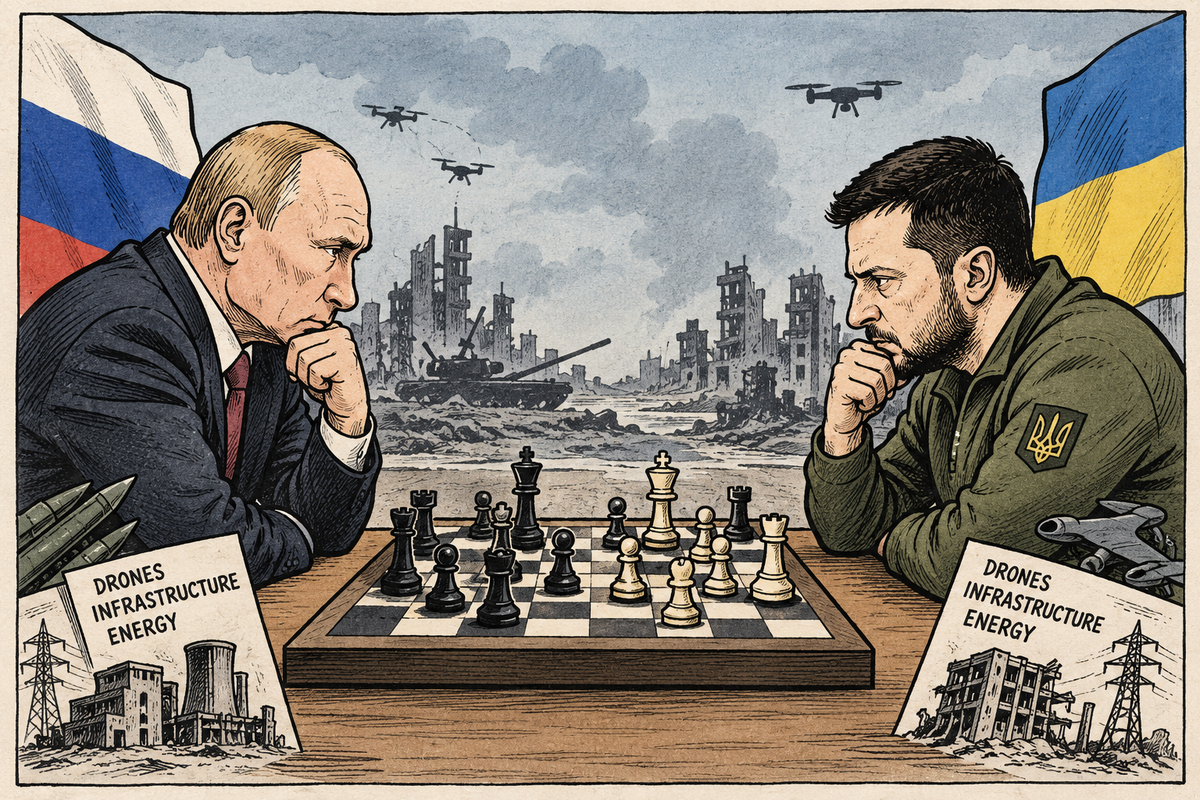
The Orientation
The Russo-Ukrainian war remains an active, systemic conflict spanning a 750-mile frontline, defined by territorial gridlock and high-intensity long-range drone and missile strikes. Initiated by Moscow's full-scale invasion in February 2022 to prevent NATO alignment and overthrow Kyiv's government, the war has produced Europe's largest human and economic dislocation since World War II. Estimates suggest casualties and fatalities are in the hundreds of thousands of total military casualties, predominantly Russian military personnel. Today, the frontline is locked in a grinding stalemate. Russian forces hold roughly 20% of Ukraine’s territory, while both militaries trade long-range strikes to degrade each other's rear logistics, air defenses, and supply chains.
The Timeline & Escalation
Russian forces launched a multi-axis invasion in February 2022, but their armored push on Kyiv collapsed within six weeks after Ukrainian forces severed supply corridors, blew critical river dams to flood transit routes, and destroyed the 40-mile northern logistics column. Ukraine then launched successful counteroffensives in late 2022, liberating territory in Kharkiv and Kherson. Following a stalled 2023 Ukrainian counteroffensive, the battlefield shifted into defensive fortification style warfare. Moscow expanded its manpower and foreign backing, integrating North Korean combat troops into frontline sectors like Kursk. Concurrently, Kyiv opened an asymmetric air front, utilising domestic long-range attack drones to target energy depots and refining infrastructure deep inside Russian borders.
The Structural Breakdown
The mechanics of the conflict center on resource sustainability, international military aid pipelines, and industrial attrition. Ukraine relies on Western financial loans, defense tranches, and intelligence sharing to sustain state operations and localised armaments manufacturing. Russia continues to fund its war through three main channels: a fully militarised war economy, a shadow fleet of oil tankers bypassing Western price caps, and alternative supply chains feeding its defense sector with foreign microchips.
Combat operations have transitioned heavily to autonomous systems, where drone saturation neutralizes traditional armor, turning territorial control into a costly, meter-by-meter artillery duel supported by deep logistics sabotage.
What Happens Next
Both nations face severe structural constraints as winter approaches, with Ukrainian energy grids under persistent pressure and Russian refining capacity curtailed by deep-strike campaigns. Diplomatic efforts remain stalled over non-negotiable territorial demands, leaving the immediate future dictated by munitions production rates and Western funding continuations.
Synthesis Receipt: Primary filings ingested via Gemini. Verified & edited for accuracy by Human Desk.
Synthesis Receipt: Primary Filings & Sources
Ministry of Defence of Ukraine / Armed Forces Operations: Operational updates, frontline logistics assessments, and casualty estimates.
Institute for the Study of War (ISW): Conflict mapping, battlefield timeline developments, and analysis of foreign troop deployments (e.g., North Korean forces in Kursk).
Center for Strategic and International Studies (CSIS): Research on long-range deep strikes, drone warfare adaptation, economic impact, and casualty analysis.
U.S. Department of Defense (Office of Inspector General): Reporting on Operation Atlantic Resolve, international defense assistance pipelines, and supply logistics.